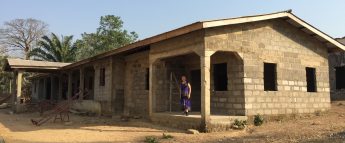
On March 16, 2019, Blama Preschool will celebrate the Official Opening of the school. Blama Preschool Project will be represented by Faith Sorenson Lester and her daughter, Kate Adamson. They will express their joy at seeing the school finally finished, with children and teachers benefitting from having this beautiful building in which to learn and teach.
Uncategorized
A Musical Journey
In January 2017, I returned to see the progress on the preschool. I met the hardworking and caring preschool teachers. Mrs. Benya, Headmistress, was not pictured, as she was on bereavement leave following the death of her daughter, of Sickle Cell Disease.
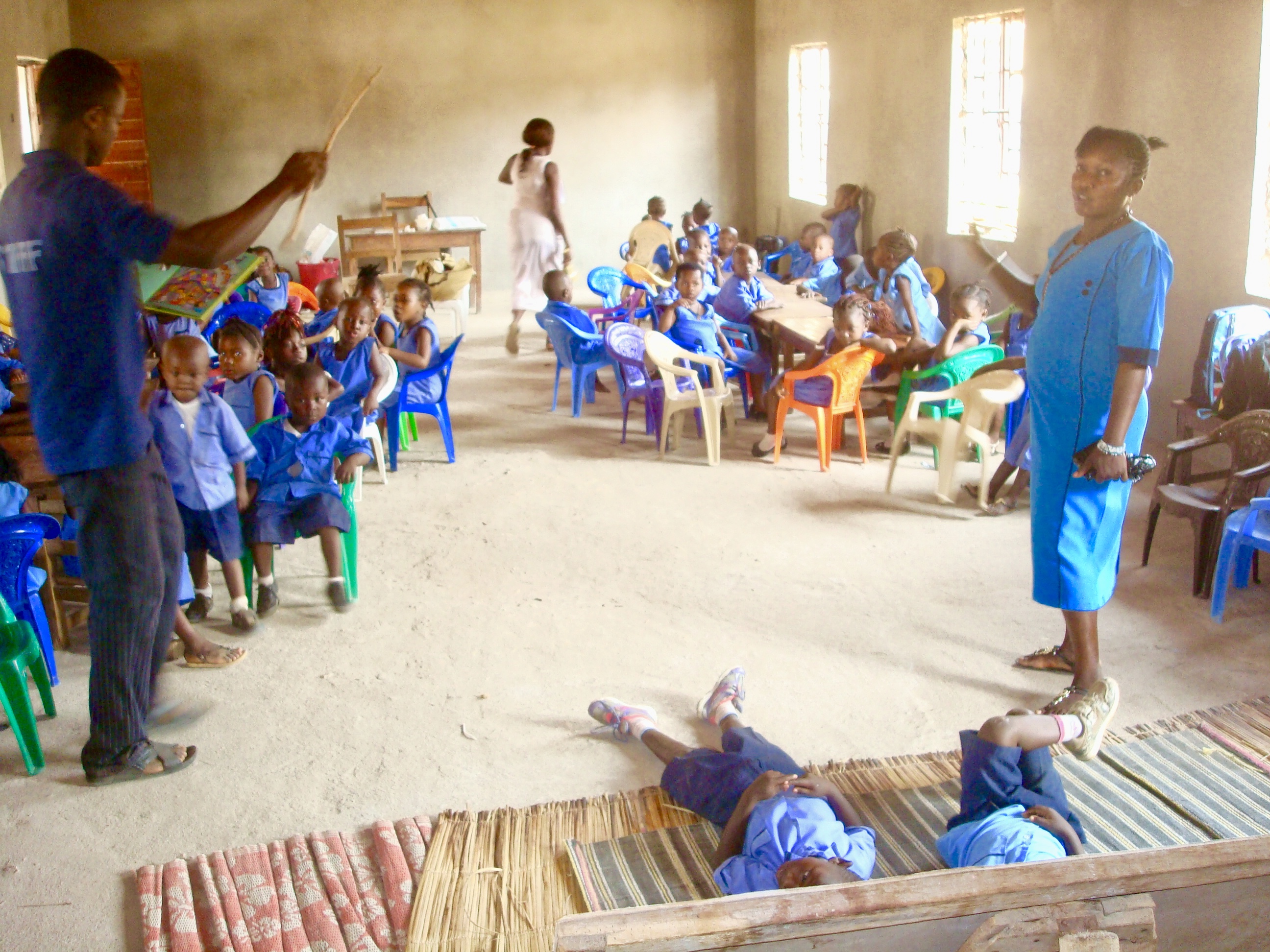
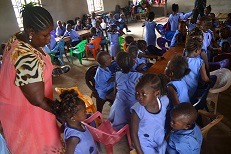
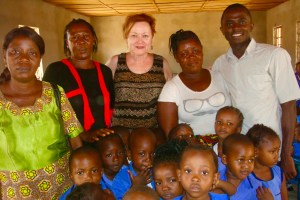 Preschool Teachers are now daily engaged in teaching 100 3 to 6-year-olds in the beautiful, yet unfinished Blama Preschool. The floors are still dirt, the walls and ceilings still unpainted, as of January 2017.
After Ebola: “Help the children go to school and improve the hospitals.”
Down to zero: Recovering from Ebola in Sierra Leone
 Al Jazeera – Sun, Apr 26, 2015
In March, West African leaders called for a “Marshall Plan” to help with regional reconstruction after Ebola, saying the region is “coming out of a war” with its economy and public services decimated.
It is the second time that Sierra Leone will attempt such a recovery in less than 15 years. When Ebola hit, the country was still rebuilding from a civil conflict that ended in 2001.
The war left an estimated 70,000 people dead and displaced roughly 2.5 million people. As Dr Muctarr Amadu Sheriff Jalloh, a former president of the Sierra Leone Red Cross Society, once explained: “The civil war brought all of the health and economic infrastructures down to zero during the 10 years.”
History seems to be repeating itself. Government restrictions on travel and public gatherings, together with the closure of markets, have severely impeded many business activities.
In the agricultural sector – where most of the population works – fields remain fallow, seeds rotted, and food stores depleted.
According to Kumarabai Kamara, administrative head for Kagbantama, there is no rice left.
“We had been in farming, but now there is no more farming,” he said.
“There are no farming implements, and when the [Ebola] crisis came, all the rice rotted.”
Official forecasts for food production in Sierra Leone in 2014 were already revised down by 6.4 percent since the onset of the Ebola outbreak.
So far no “Marshall Plan” for West Africa exists, though the heads of the most affected countries have stressed the “importance of maintaining international engagement with the recovery and development process in the Ebola-affected countries”.
According to Abdul, help from abroad will be important to post-Ebola recovery, and should focus on two important areas: “To help the children go to school and to improve the hospitals.”
This will help prevent another crisis, he said.
Abdul said he will overcome the personal difficulties he faces “with the help of the almighty, and the others”.
Ebola Virus Crisis
Ebola is devastating communities in Sierra Leone, Liberia and Guinea, tearing families apart, and spreading fear throughout the country. Well over one thousand people have died in these countries combined. There is tremendous misunderstanding and fear about the disease and how it is spread. Families are increasingly susceptible to detrimental implications, including the interruption of schooling and educational attainment.
Fortunately, to date, there are no suspected cases of Ebola in Blama. Fr. Combey reports that the community is being diligent about hand washing and following the practices of the prescribed health and sanitation measures.
We are praying for progress in finding a cure for Ebola and the ultimate outcome of ridding the world of it. Meanwhile, please donate to an organization which is funding research and/or humanitarian assistance. Sherbro Foundation is one such organization: sherbrofoundation.org They are leading the way, helping the villages in rural Sierra Leone by providing sanitization materials and educating people about safety precautions.
The Blama Preschool Project continues to move forward, preparing for the day when students will return to school. At that time, we want to be able to greet the youngest of Blama’s children with a new school building, built for them to begin their education. Any amount of donation you wish to make to Blama Preschool Project will be a great help in fulfilling that dream.
 Sierra Leone Peace Education Project